
Amazon DSP is Amazon's new advertising and programmatic campaign platform that includes programmatic advertising management for ads on Amazon Marketplaces (Amazon Ads), Amazon Music, Amazon Stores, Twitch, Amazon Kindle ads, Prime TV ads, and also ads on other Amazon owned and third-party channels.
From the advertiser's perspective, this is the most efficient way (so far) to automate the purchase of online advertising space. Thanks to machine learning, big data , and artificial intelligence—those buzzwords of recent years—it's now much easier to reach the right audiences at the right time and place.
How? Thanks to a more traditional concept: supply and demand.
How does Amazon DSP work?
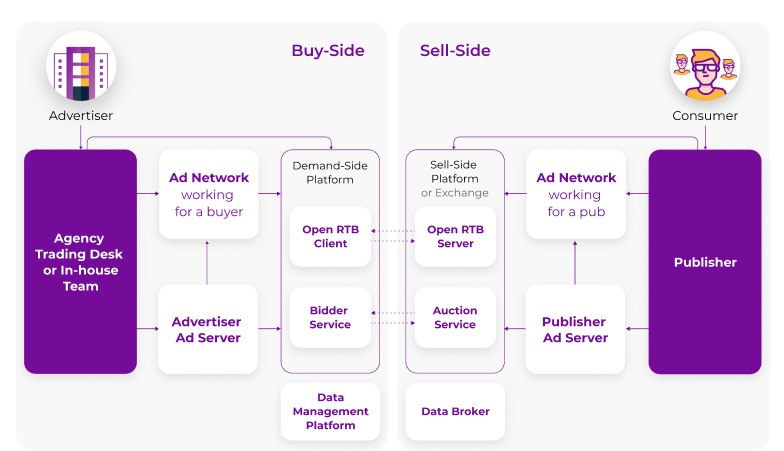
On one hand, SSPs (Supply Side Platforms) offer the inventory (advertising spaces) of different publishers; and on the other hand, DSPs (Demand Side Platforms, in our case Amazon Demand Side Platform) facilitate the purchase of those advertising spaces through an automatic bidding system (real time bidding).
In between lies the Ad Exchange, the marketplace where the two interact. Therefore, Amazon's DSP relies on the Amazon Marketing tools that Amazon provides.
Programmatic advertising will allow us to reach a wider audience when launching new products, as well as generate dynamic digital advertising ads, targeted campaigns, and reach and re-reach existing audiences.
According to Alberto López, a digital marketing specialist, "Amazon DSP's capacity to integrate Amazon consumers data with navigation and purchase behaviors allows campaigns to be extremely precise and effective, which means a fundamental change in online advertising" Source.
Who can use Amazon DSP?
To begin, the Amazon DSP service is available to advertisers who sell products on Amazon as well as those who don't. In fact, it can be used to promote products even if the brand doesn't have an Amazon store . Furthermore, users have two options :
- Self-service: where the customer has full control of the ads and campaigns.
- Managed service: Preferred for businesses that want access to Amazon DSP inventory or need specific programmatic advertising advice. This option requires a minimum investment that varies by country.
What is the Amazon DSP differential?
There are several points where Amazon DSP differs from other existing programmatic purchase platforms. Let's look at some of them:
Exclusive audiences
To begin with, Amazon is the online marketplace leader in Spain with a penetration among consumers of 80% (well above the rest of marketplaces, which are between 19% and 50%)*.
Furthermore, Amazon is a complete ecosystem that contains user data throughout their entire customer journey: from when they start browsing, the times they visit a certain category, study the opinions on different items, add products to the wish list, make the purchase and even subscribe.
All this information is organized and categorized into hundreds of audiences available to advertisers, allowing them not only to optimize the relevance of targeting but also to track user conversions if they sell on Amazon. This isn't possible with other DSPs. And let's not forget that Amazon isn't just e-commerce: its audiences also come from Prime Video, Twitch, and we'll likely soon see more platforms like Amazon Music integrated into the DSP.
Audience Builder and Overlap
In addition to the hundreds of categorized audiences available on Amazon DSP, it also offers a self-service tool for creating ad-hoc audiences. These can be built based on specific products, brands, similar products, Amazon Store visits, Amazon Prime Video interactions, and even Twitch audiences for particular streamers, channels, or categories.
If that weren't enough, it also allows us to discover new ones through the "overlap report": starting from a specific audience (for example, the one that works best for us), we can download a report with other similar audiences ordered by affinity level and size.