
When selling online, one of the most challenging aspects is understanding how each interaction influences customer decisions. From the initial ad that catches their eye to the moment they complete the purchase, every touchpoint is crucial. This is where Amazon Marketing Cloud ( AMC ) becomes a valuable ally, as it's a tool designed to provide in-depth analysis of your campaign data and optimize your advertising attribution strategy .
A few days ago, I was talking on YouTube about two of the aspects I'll be covering in this post: the Customer Journey in Amazon ads and the Ad Type Overlay from Amazon Marketing Cloud.
If you're wondering how to get the most out of AMC, here's how it works, what benefits it offers, and how you can integrate it into your strategies for better results.
Index
What is advertising attribution and why is it important?
When we talk about advertising attribution, we're referring to the process of identifying which channels, campaigns, or interactions were decisive in a conversion . Understanding this process is important for:
- Knowing which campaigns generate results allows you to allocate your budget where it matters most.
- Identify the points that truly motivate people to interact with your brand.
- Adjusting your campaigns based on concrete data allows you to improve the user experience and can translate into more sales.
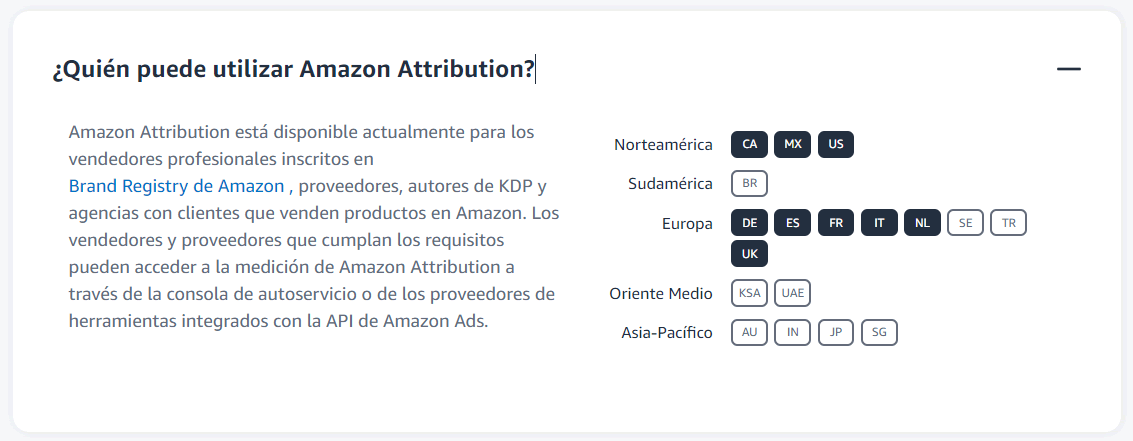
Without the right tool, analyzing all these factors can be overwhelming. But AMC simplifies things by providing a clear and detailed view of your customers' journey. There's also another tool we've discussed on this blog: Amazon Attribution , which is for external campaigns. AMC, however, uses it for internal Amazon campaigns, specifically Sponsored Products, Sponsored Brands, Sponsored Display , and Amazon DSP .
How can AMC improve advertising attribution?
Once we understand what Amazon Marketing Cloud is (and if you don't know, I'll tell you here ), let's get down to business: learning how AMC improves advertising attribution.
Multichannel measurement
You can analyze how users interact with your ads across different formats and devices . Imagine a customer sees an ad on their mobile phone, then interacts with another on their tablet, and finally makes a purchase on their computer. AMC helps you track and understand the role of each of these touchpoints.
Here's an example:
If you find that Sponsored Brands ads on mobile devices generate more initial interest , but conversions occur after viewing Sponsored Products ads on desktop, you can adjust your strategies to enhance this combination.
Customer journey analysis
AMC lets you visualize every stage of the customer journey, from first impression to conversion , displaying data such as:
- Average time between viewing an ad and making a purchase.
- Number of interactions before conversion.
- Customer behavior according to device.
This information helps you identify points of friction and improve the user experience.
Custom attribution models
This Amazon tool gives you the freedom to apply attribution models that fit your needs to have a more accurate view of the impact of your campaigns.
The models are:
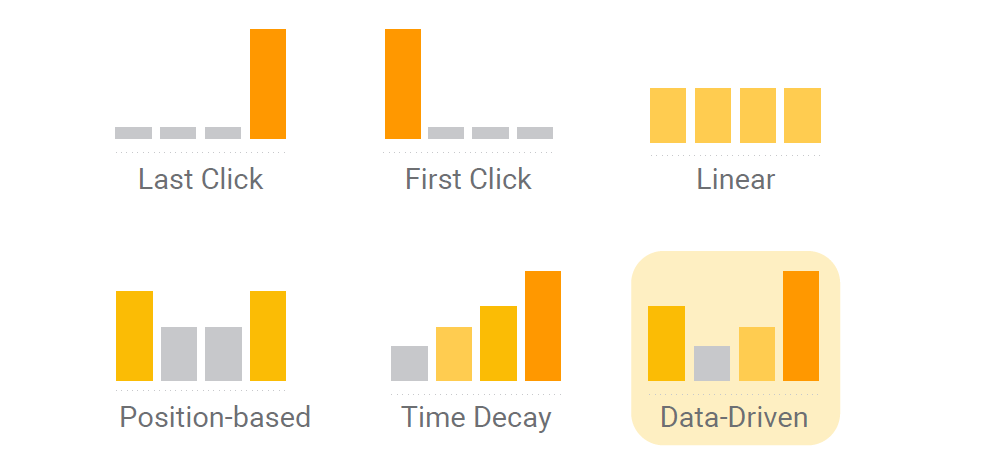
- Linear: Gives equal weight to each point of contact.
- Decrement over time: Prioritize interactions close to conversion.
- Based on position: Assigns greater weight to the first and last point of contact.
These models will probably sound familiar if you've already worked with Google Universal Analytics (now GA4) attribution, where we found, in addition to these, other attribution models:
- Last interaction model or Last click : the entire conversion value to the last channel or traffic source that was clicked.
- First interaction model or First click : the same, but attributing to the first source of click.
- Linear model : distributes the conversion cost evenly across all click points. In this case, if the user clicked on Sponsored Products, Brands, and Display ads before converting, it would attribute 33% of the conversion cost to each campaign type.
- Position-based model or Time Decline : This model attributes most of the conversion weight to clicks in the final stage before conversion, based on a 7-day timeframe. It assumes the user will take 7 days (or a specific amount of time) to make a purchase decision. This model is not suitable for impulse/non-brainer products. However, it would be suitable for products such as a television, refrigerator, freezer, or car.
- Time-decay or Position-based Model : 40% of the weight to the first and last click event and the remaining 20% among all other clicks made during the path the user followed before buying.
- And, most interestingly, data-driven attribution : it distributes the weight based on the data observed in each type of conversion .
Identifying key points
With custom SQL queries, you can discover which elements have the greatest influence on your customers' decisions . For example, you can identify whether videos generate more interest at the beginning of the customer journey, while static ads perform better closer to conversion.
Case study: Increasing conversions in an e-commerce
Imagine you have a beauty products business on Amazon. Based on what we've explained before, with AMC, you could:
- Discovering that Sponsored Products ads generate more clicks, but Sponsored Brands ads contribute more to conversions.
- Identifying that users who view both formats are 20% more likely to buy.
- Redirect your budget to combine both types of ads and maximize results.
Amazon Marketing Cloud is much more than an analytics tool; it's a comprehensive solution that can transform how you understand and optimize your advertising campaigns. So, if you're looking to make smarter decisions, improve customer experience, and increase conversions, AMC is the resource you need.
Explore AMC now and discover how it can take your marketing strategies to the next level.
